

Wellness Journeys

Every journey is different. These profiles explore the small routines, practical choices and changes in perspective that can help wellbeing feel more manageable.

James at the beginning of his wellness journey
Where James started
James later in his wellness journey
Building a routine

James, 42: finding a routine that fitted

James had reached a point where every attempt at improving his routine seemed to begin with too many rules. Long working days meant lunch was often rushed, evenings were spent grazing rather than eating a proper meal, and bedtime drifted later as he tried to switch off with his phone.

Instead of attempting a complete overhaul, he began with a few changes he felt he could repeat. A more regular evening meal gave the day some structure. On three evenings each week he took a short walk, not as punishment or a challenge, but simply as a way to leave work behind.

What changed first

The biggest shift was his evening routine. James started treating the last part of the day as a transition rather than carrying on until he was exhausted. He prepared a few things for the following morning, put his phone aside earlier and used calm music as a familiar cue to slow down.

Over time, the focus became consistency rather than chasing a dramatic result. Some weeks were easier than others, but the routine was flexible enough to return to after busy periods.

James's takeaway

For James, progress meant finding something that worked on an ordinary Tuesday as well as on a perfect week. The useful changes were the ones he could actually live with.
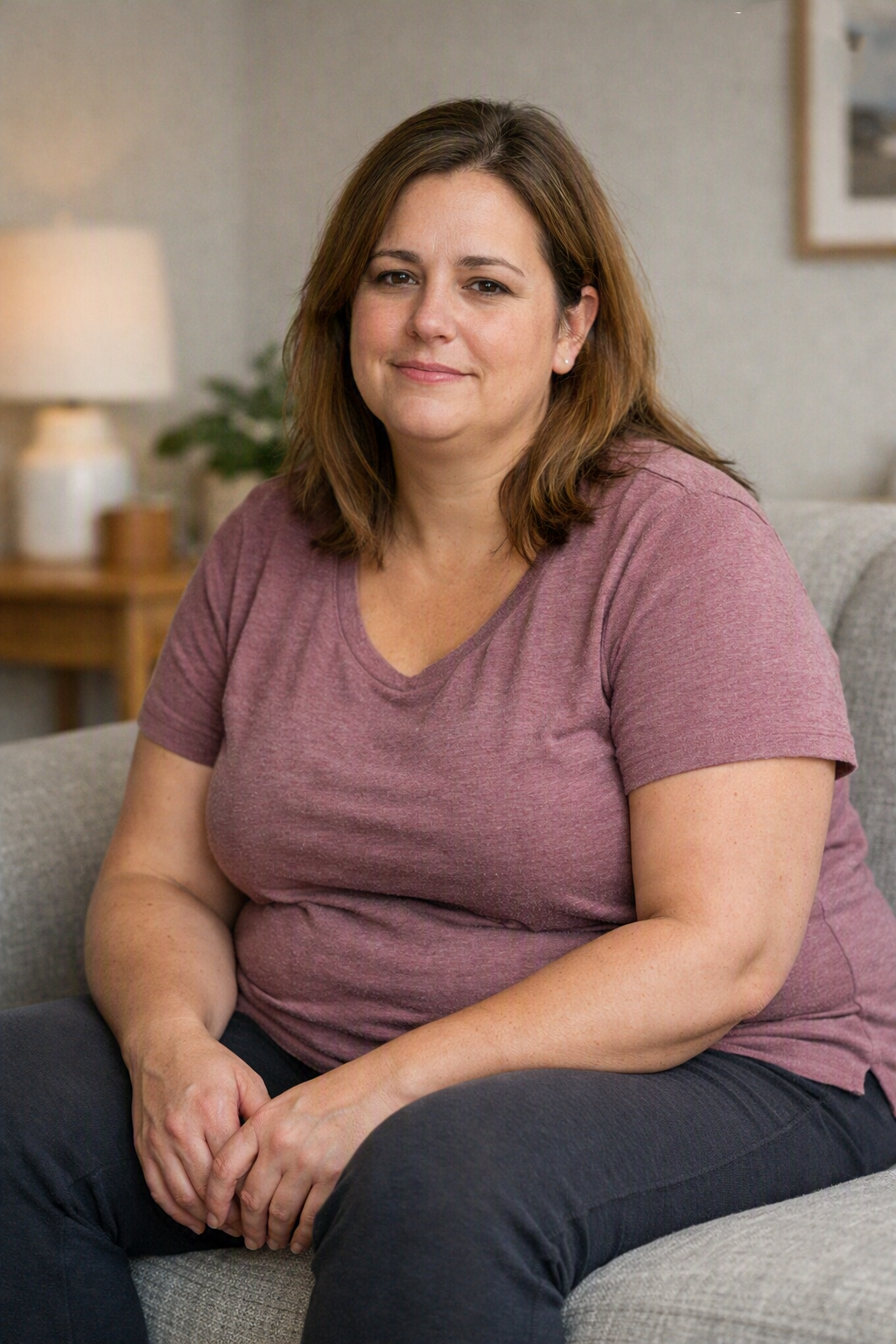

Sarah at the beginning of her wellness journey
Starting point
Sarah later in her wellness journey
Finding balance

Sarah, 36: moving away from all-or-nothing thinking

Sarah was used to starting with enthusiasm and finishing with frustration. A difficult day could quickly become a reason to abandon the whole routine. Food choices became something to judge rather than something to plan around, and she often felt that she was either being completely strict or not trying at all.

Her approach changed when the focus moved away from perfection. She began planning meals she genuinely enjoyed, keeping a few convenient ingredients at home and allowing busy days to look different from quieter ones.

Making the plan fit real life

Sarah found it helpful to have a loose structure without turning every meal into a test. She planned ahead when she could, accepted that plans sometimes changed and looked at what helped her return to a routine instead of concentrating on what had gone wrong.

She also made more room for rest. A calmer evening routine became part of the wider picture, alongside movement she enjoyed rather than exercise she felt she had to endure.

Sarah's takeaway

The most useful change was learning that one difficult day did not erase everything else. A routine could bend without breaking.